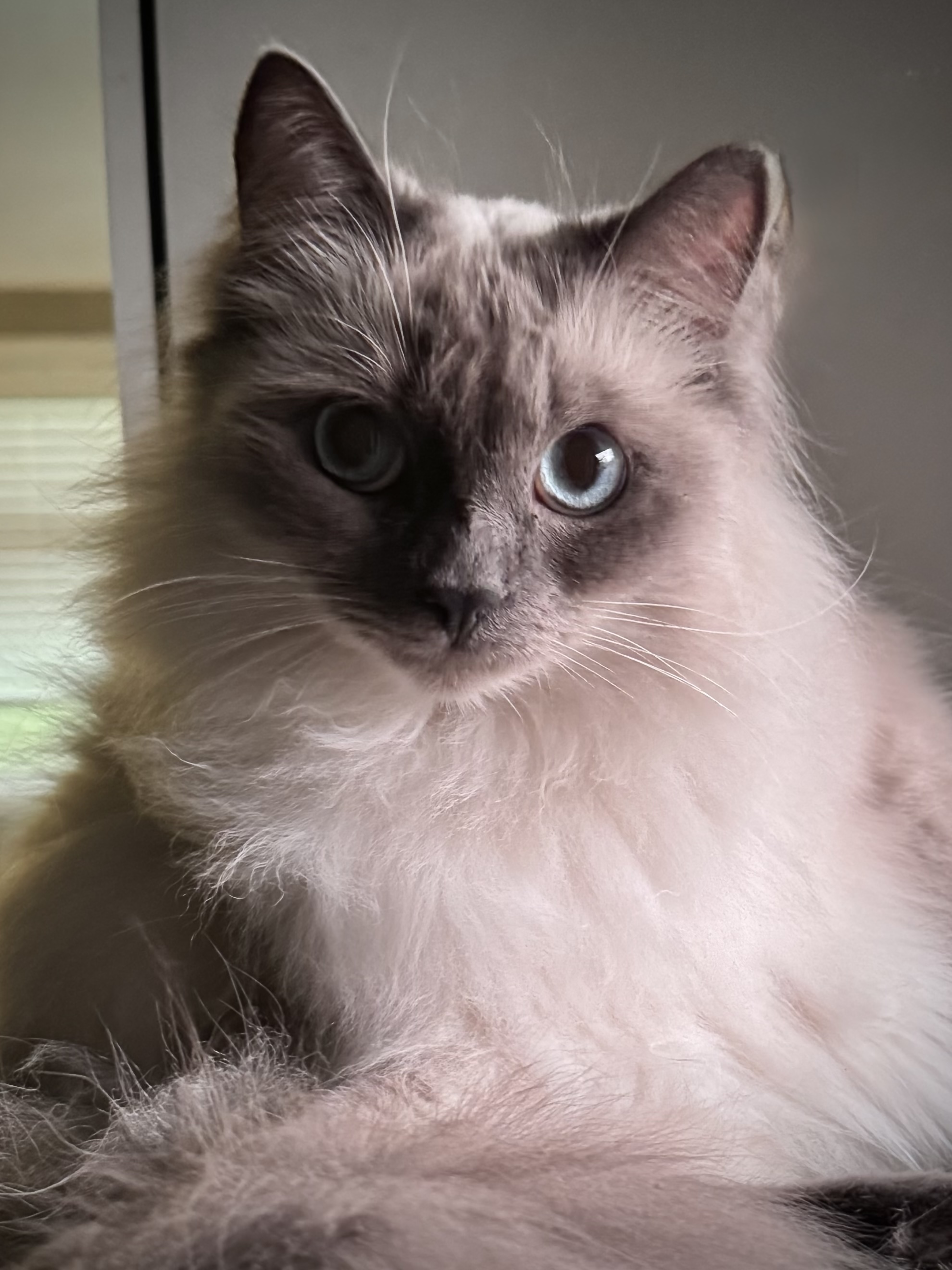
If you've ever stood in a pet store holding three different bags of food, completely stumped, you're not alone. It's one of the most common conversations I have with cat parents: "My cat is so picky." "She won't eat anything except what I get at the grocery store." "I tried the expensive stuff and he turned his nose up at it."
Here's my take: people overthink this. Cats are independent, particular creatures, yes. But a lot of what we call "picky" behavior has a very straightforward explanation. And once you understand it, the fix is pretty simple.
Let's start with the basics. When I ask what someone is feeding their cat, the answer is almost always some version of: dry food, or dry food with a little canned mixed in. Totally common. Nothing wrong with that on the surface. But then I ask the follow-up question that tends to stop people in their tracks:
"Do you leave the dry food out all day?"
The free-feeding problem nobody talks about
For what feels like forever, there's been this idea floating around that it's perfectly fine, even preferable, to leave a bowl of dry kibble out all day and let your cat graze whenever they feel like it. It sounds convenient. Low maintenance. And honestly, it's become the default for a lot of households.
I disagree with it. And here's why.
To understand the problem, you have to understand what dry food actually is and how it's made. Because once you know that, what's happening in that bowl sitting on your kitchen floor starts to make a lot more sense.
How kibble is actually made
The raw ingredients, whole meats, organ meats, vegetables, and grains, are combined and cooked under high heat and pressure. That process drives out virtually all of the moisture, leaving behind concentrated dry matter. Those dried components are then pushed through a die via a process called extrusion, forming the kibble into those familiar little pieces. Think of it like a meat-and-veggie pasta press operating under extreme heat and pressure.
Once the kibble is formed and dried, it gets sprayed with fat and a vitamin and mineral blend to "complete" the food. I always put quotes around the word complete, because in this industry, I genuinely believe nothing is truly complete. We don't fully know everything an animal needs, which is exactly why AAFCO sets minimums rather than absolutes. But that's a conversation for another day.
That fat coating on the outside of every kibble piece? It's what makes the food smell good to your cat. It's also what goes bad when the food sits out in the open air.
Fat, air, and why your cat might be right
Fatty acids have surprisingly weak chemical bonds, weak enough that exposure to oxygen alone can break them down. When that happens, the fat oxidizes. It goes rancid. And rancid fat smells different. Tastes different. Your cat, with a sense of smell that puts ours to shame, absolutely notices.
So when your cat walks up to the bowl, sniffs it, and walks away? They might not be being dramatic. They might be telling you the food has turned.
You wouldn't leave a plate of food sitting on the counter all day and expect it to taste the same by evening. Your cat's bowl isn't any different, and they know it before you do.
But what about preservatives?
Fair point. Preservatives exist for exactly this reason, to slow down or prevent fat oxidation and extend shelf life. But here's where it gets nuanced. The conventional synthetic preservatives are very effective at preventing oxidation. But they come with a reputation that's hard to ignore.
BHA
BHT
Ethoxyquin
Most pet foods today have moved away from those three and use mixed tocopherols, essentially vitamin E, as a natural preservative instead. That's a good thing. But mixed tocopherols, while safer, are simply not as powerful. They slow down oxidation but don't stop it. Once that bag is open and exposed to air, the clock is ticking.
Synthetic preservatives like BHA and BHT are roughly three times more effective than tocopherols at preventing oxidation. Ethoxyquin is about five times more effective. Natural preservation is better for your cat, but it means freshness and storage habits matter more, not less.
So what's the fix? Keep it simple.
Stop free feeding. Do meals instead. Pick a feeding schedule. Morning and evening works well for most cats, and put out what your cat will eat in a sitting. What they don't eat comes up. Fresh food goes down at the next meal.
✅ Storage Do's
Texture matters more than you think
Let's talk about canned food, because this is where a lot of cat parents give up too quickly. "I tried wet food and my cat won't touch it." Okay, but which texture did you try? Manufacturers don't just make one kind, and there's a reason for that.
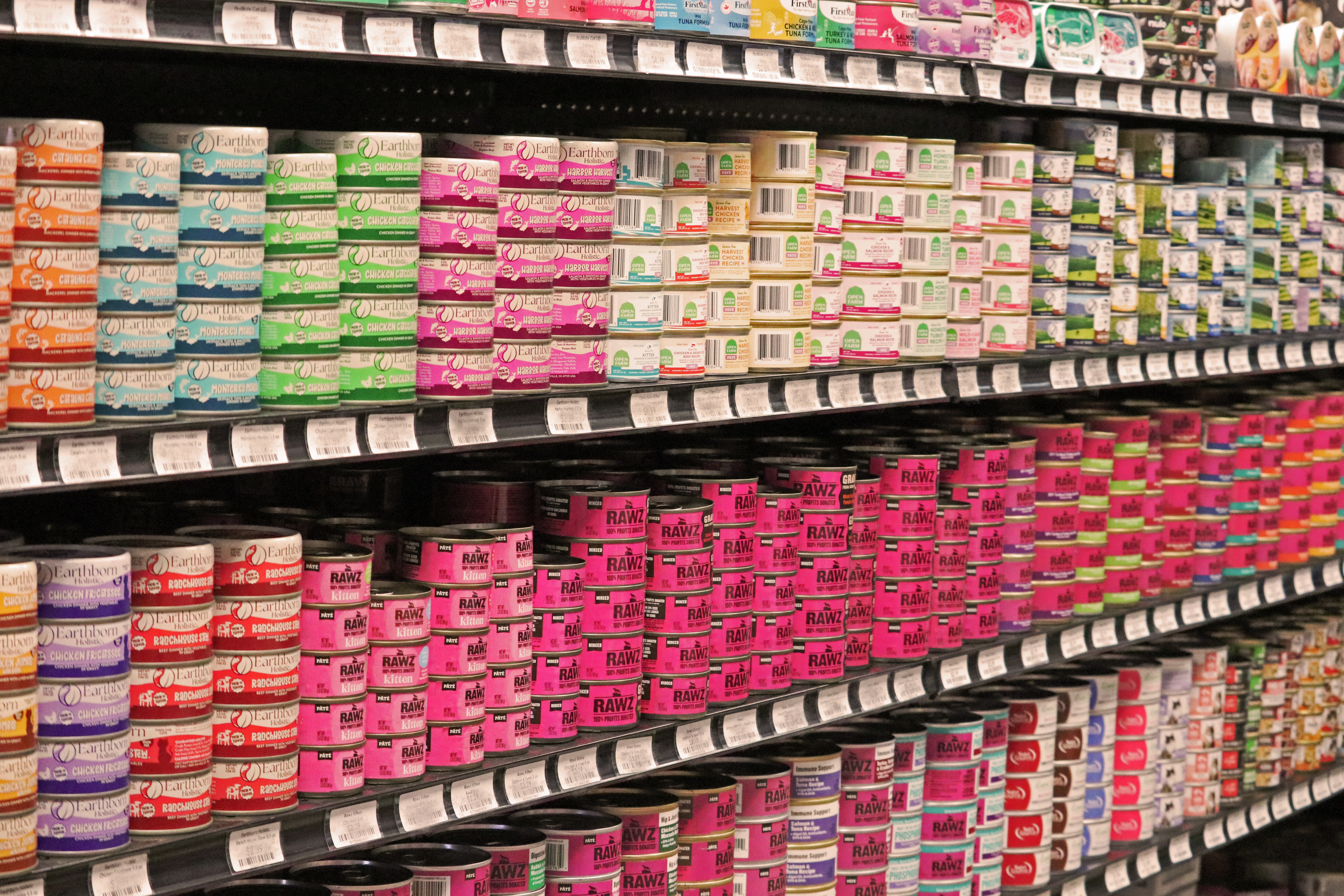
Find multiple proteins and multiple textures your cat will accept, not just one. You want backup options. Rotating proteins is also one of the simplest ways to fill in nutritional gaps we don't even know exist yet.
So why does your cat only eat the grocery store stuff?
This one comes up constantly. There's a very specific reason, and once you understand it, it all makes sense. The pet food industry developed something called palatants: ingredients specifically designed to make food more appealing by targeting the senses of a particular species. For cats, one of the most widely used is Sodium Acid Pyrophosphate (SAPP), which essentially stimulates a cat's taste receptors in a way that makes the food almost irresistible.
You won't usually see "Sodium Acid Pyrophosphate" on a label. More often it shows up as:
- Beef liver flavor
- Chicken flavor
- Animal digest
- Natural flavor (cat)
- Hydrolyzed chicken liver
These palatants are heavily used in mass-market grocery store brands. Your cat isn't choosing that food because it's better. They're choosing it because it's been engineered to be as compelling as possible to a feline palate. It's the pet food equivalent of fast food, designed in a lab to hit every trigger.
Once a cat is hooked on a heavily palatant-laden food, transitioning them to something else can feel nearly impossible. But it's not. It just takes patience and a slow transition. The "picky cat" in this case isn't being picky at all. They've been conditioned.
Moisture: the one thing most dry-food-only cats are missing
Cats evolved in the desert. Their primary source of hydration was never a water bowl. It was the prey they ate. Raw meat is approximately 70–80% moisture. That's where cats are designed to get their water from.
When I tell this to someone whose cat eats only dry food, they usually say: "Oh, but my cat drinks tons of water, they're fine." That response is actually a red flag, not a reassurance.
dry kibble serving
or raw prey
Research shows that even cats who drink heavily on a dry-only diet are still getting only about half the total water they need compared to a cat on a wet food diet. They compensate, but not nearly enough. A cat's thirst drive was never built for this. Their biology assumed the food would handle hydration. When it doesn't, the body starts paying a price.
Chronic kidney disease is the number one cause of death in cats over 5 years old. Dry-only diets produce highly concentrated urine, which over time stresses the kidneys and creates conditions favorable for crystal and stone formation in the bladder. The "my cat drinks a lot of water" response isn't a sign that everything is fine. It's a sign that the body is working overtime to compensate for something it shouldn't have to compensate for.
If your cat is on a dry-only diet, getting some wet food into the rotation isn't just a nice-to-have. It's one of the most impactful things you can do for their long-term health. Even a partial switch makes a meaningful difference. You don't have to go all-in overnight. Start somewhere.
So what's the best option?
I could keep going, and trust me, there's plenty more to cover. But if I had to leave you with one thought, it's this: variety is your friend, and overthinking is your enemy.
Explore different textures. Rotate proteins. Get some moisture into the diet. Do meals instead of leaving food out all day. Store the food properly. And when your cat turns their nose up at something, which they will, don't panic. You've got backup options, because you planned ahead.
Your cat doesn't need a perfectly optimized, scientifically calculated feeding plan. They need a thoughtful, engaged cat parent who pays attention and keeps things fresh. That's it. You already are that person. Otherwise you wouldn't have read this far.
Variety is good. Simple is better. And the best thing you can do for your cat is stop overthinking it and start doing it. Your cat will thank you in their own way, on their own terms, when they feel like it. Because that's just how cats are.
This is always the conversation I love having most. Come in and bring the bag you're currently using, and we'll talk through it together. No pressure, just honest advice. Find us in Freedom or Santa Cruz Westside.